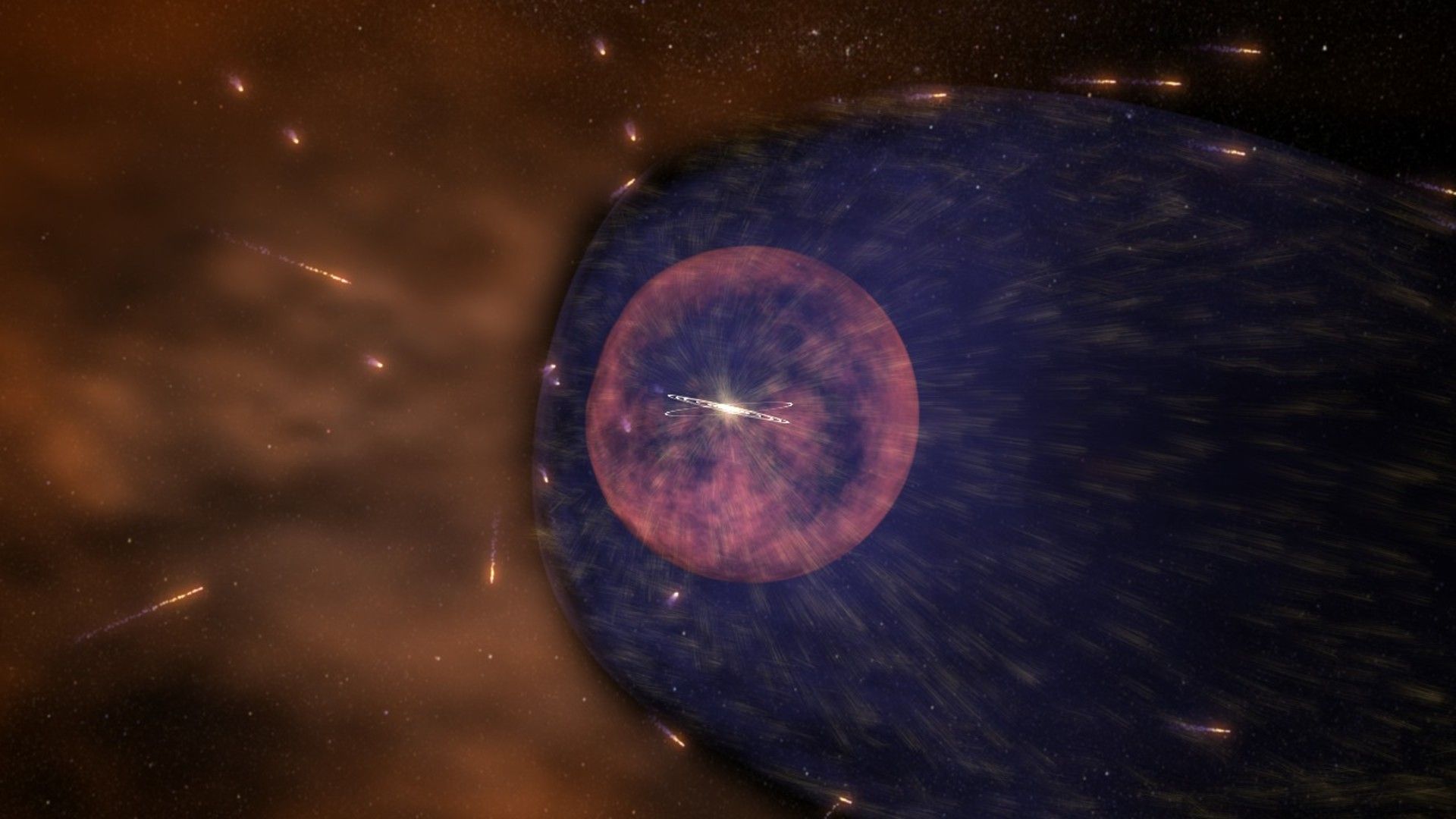
Two scientists argue the solar system’s edge should be redefined using the Milky Way’s gravity, including dark matter. They say the frontier may extend to about 3.8 light-years from the Sun.
01Summary
- 01Jim Green, a former NASA chief scientist, and Ed Belbruno of Yeshiva University and Princeton University set out the theory.
- 02They say the solar system’s gravitational frontier reaches nearly 3.8 light-years, or about 241,000 astronomical units, from the Sun.
- 03The pair published their case in the August 2026 issue of ROOM, the Space Journal of Asgardia.
- 04They say Solar Lagrange points L1 and L2 could act as a kind of portal for interstellar visitors such as comet 3I/ATLAS.
- 05Green said he is discussing possible observations with the New Horizons spacecraft team, which flew past Pluto in 2015 and is now in the outer heliosphere.
02Why it matters
The idea could change how scientists define the boundary of our solar system and where interstellar objects might be captured. It also matters for future observations of the outer solar system and the role of dark matter in the Milky Way.
Pulse AIAsk about this story
Answers are generated by AI from the story summary; they are not investment, health or legal advice.