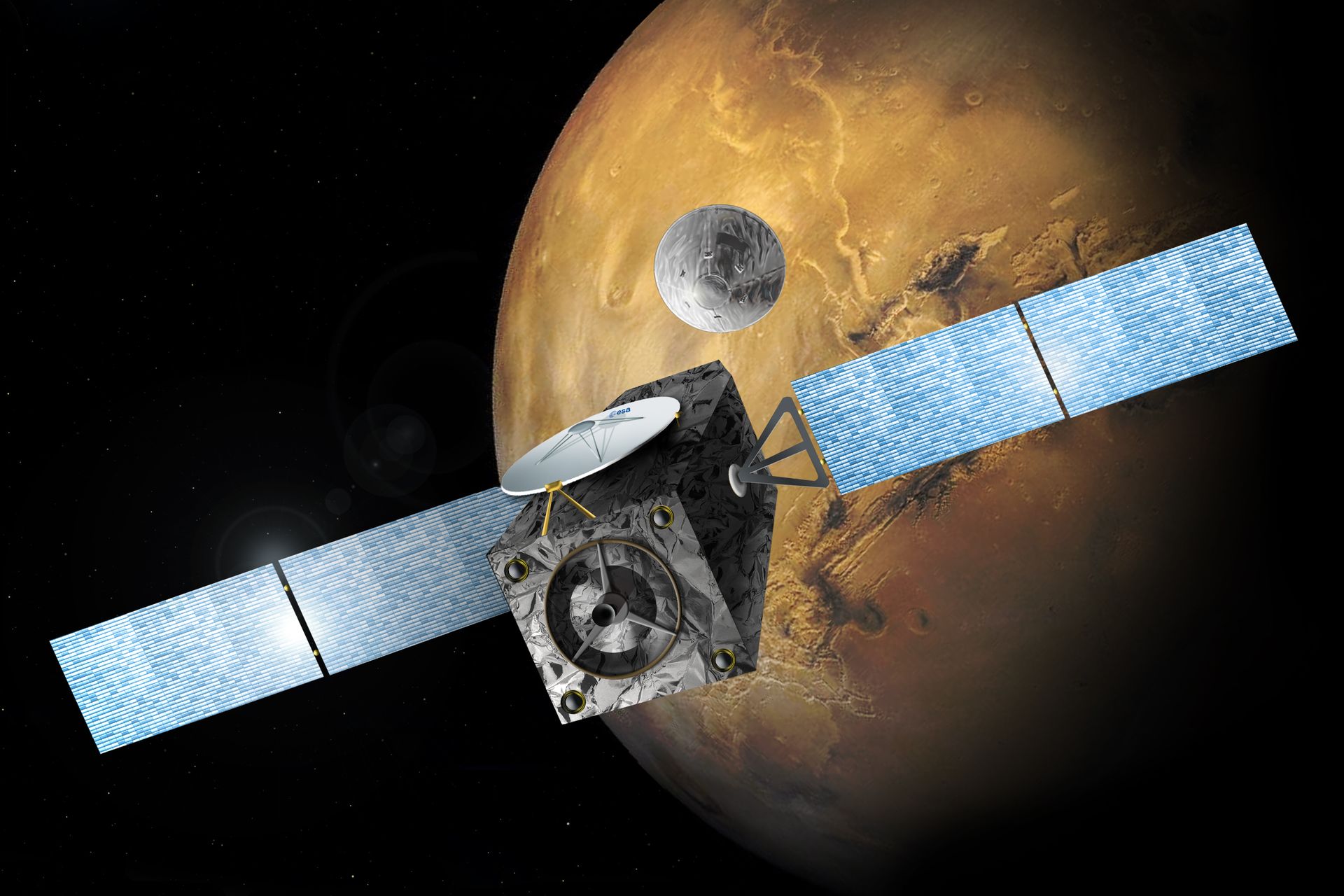
In 2016, ESA's ExoMars mission delivered the Trace Gas Orbiter into Martian orbit, but the Schiaparelli lander crashed. The orbiter continues to study the atmosphere.
01Summary
- 01ExoMars 2016, consisting of the Trace Gas Orbiter and Schiaparelli lander, arrived at Mars on Oct. 19, 2016.
- 02Schiaparelli crashed after losing communication one minute before landing on Oct. 19, 2016, due to a data glitch.
- 03The Trace Gas Orbiter remains functional, searching for methane and other gases as evidence of biological activity.
- 04The mission was deemed '96% successful' by ESA, with the orbiter now operating for over 10 years.
- 05The ExoMars 2018 rover, Rosalind Franklin, was delayed and is now expected to launch no earlier than 2028.
02Why it matters
This event highlights the challenges and partial successes of international Mars exploration, with ongoing science from the orbiter and lessons for future landing attempts.
Pulse AIAsk about this story
Answers are generated by AI from the story summary; they are not investment, health or legal advice.