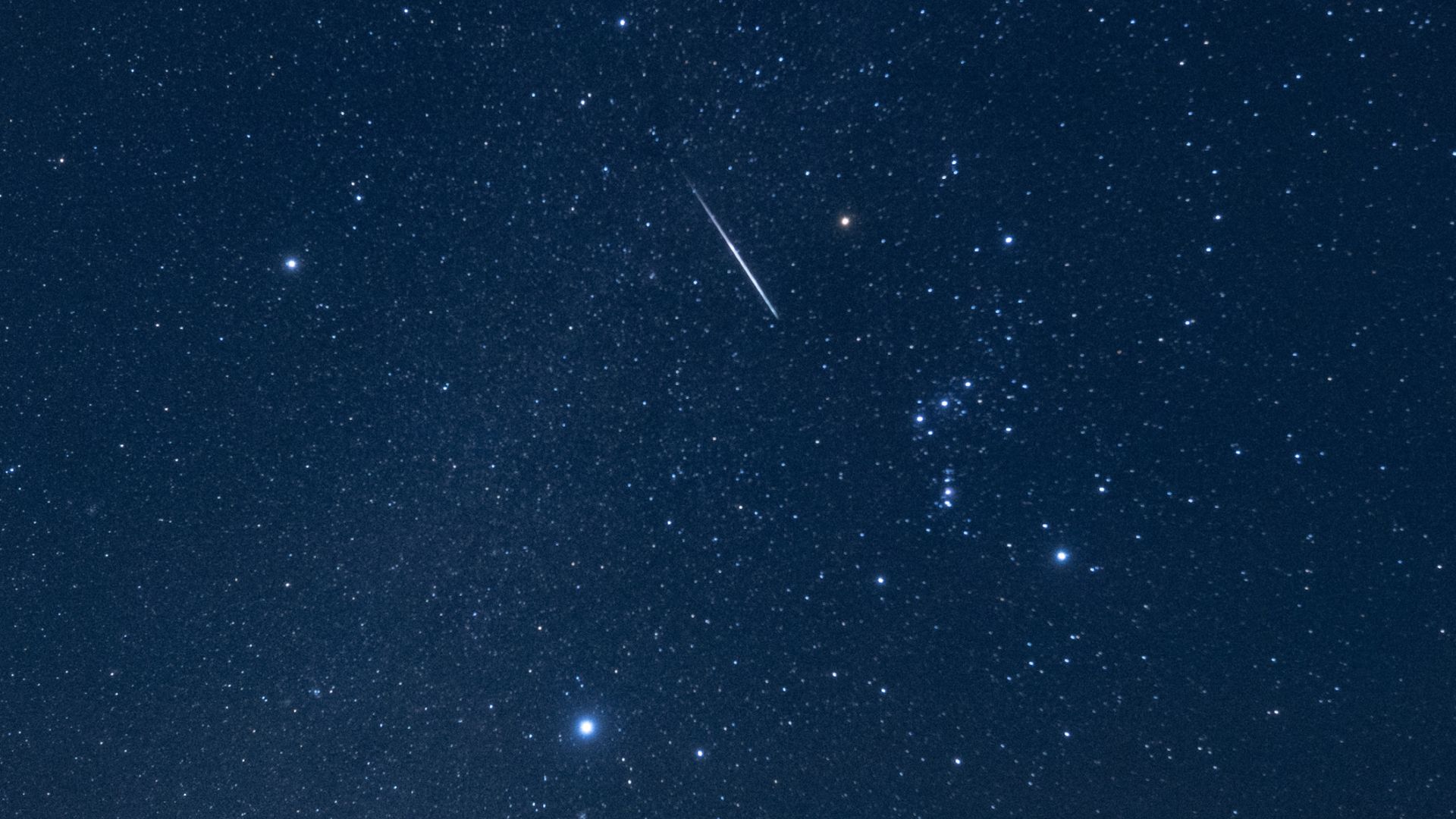
The Orionid meteor shower peaks on the night of Oct. 21-22 as Earth passes through debris from Halley's Comet; best viewing is after moonset before dawn.
Follow the storyHere8 stories
01Summary
- 01The Orionid meteor shower peaks overnight on Oct. 21-22, with 10-20 meteors per hour under ideal dark skies.
- 02Meteors originate from a radiant near the star Betelgeuse in the constellation Orion.
- 03A waxing gibbous moon (74% lit) will obscure faint meteors until it sets a few hours after midnight.
- 04For best views, look 40-90 degrees away from the radiant and allow 20-30 minutes for dark adaptation.
- 05Shooting stars are caused by Comet 1P/Halley debris hitting Earth's atmosphere at 147,600 mph.
02Why it matters
This annual celestial event offers a chance to see bright meteors; timing your viewing after moonset will improve your experience.
Pulse AIAsk about this story
Answers are generated by AI from the story summary; they are not investment, health or legal advice.