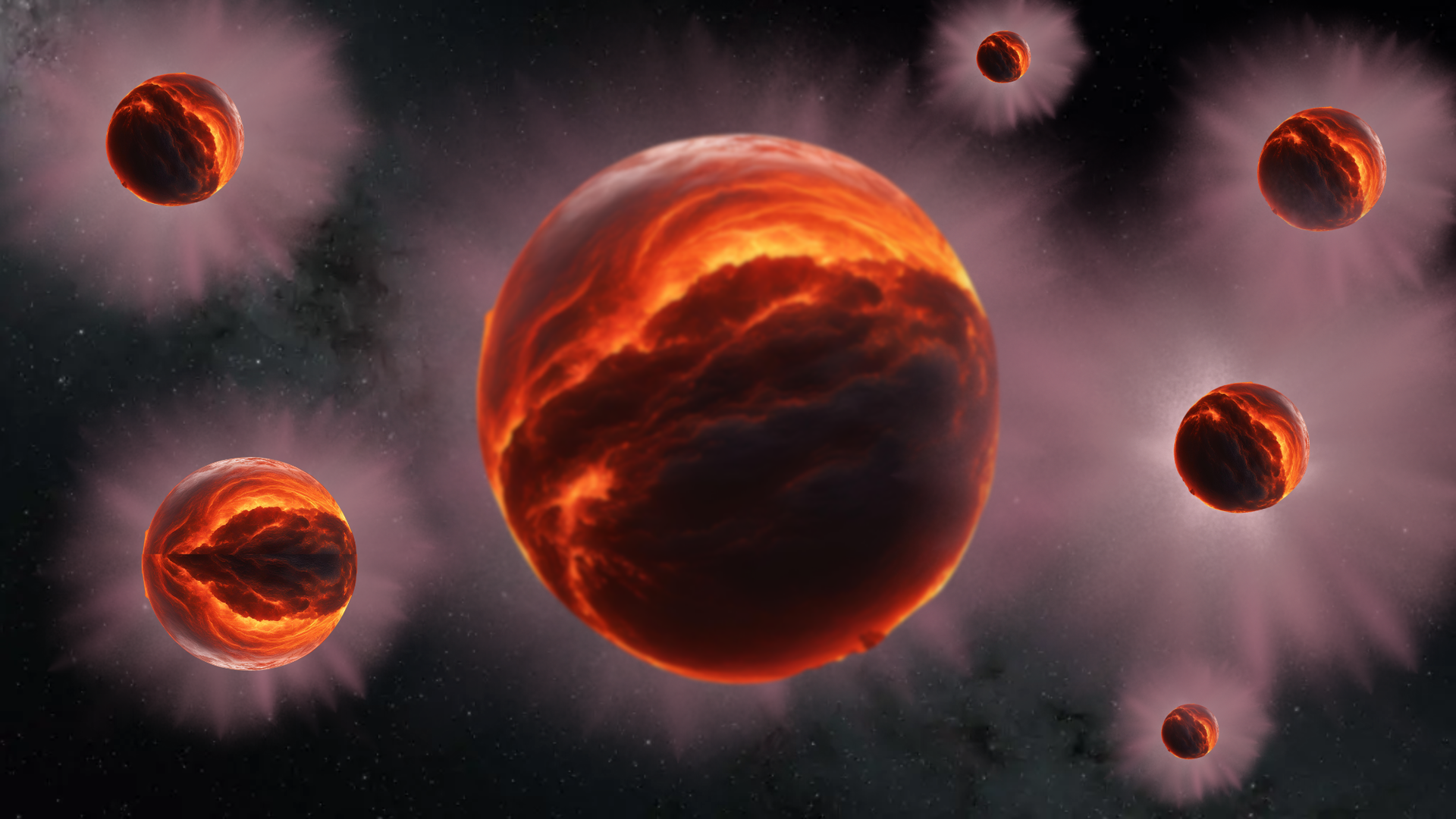
Using NASA's SPHEREx spacecraft, astronomers have studied 37 brown dwarfs, finding their atmospheres rich in water, carbon dioxide, carbon monoxide and methane. The data reveals these 'failed stars' are chemically similar to gas giant planets and show significant variation even at the same temperature.
01Summary
- 01Brown dwarfs have a mass between 13 and 80 times that of Jupiter and form like stars but lack sufficient mass for hydrogen fusion.
- 02The SPHEREx spacecraft observed 37 brown dwarfs across 102 wavelengths from deep red to infrared light.
- 03Temperatures of the studied brown dwarfs range from 4,000°F to minus 10°F (2,200°C to minus 20°C).
- 04The atmospheres contain water, carbon dioxide, carbon monoxide and methane, with some brown dwarfs showing clearing clouds and methane-rich atmospheres.
- 05The research was published in The Astrophysical Journal on September 28.
02Why it matters
This study provides the first detailed chemical survey of brown dwarfs, objects that bridge the gap between planets and stars. Understanding their atmospheres and evolution could clarify how these mysterious cosmic loners form and change over time, offering insights into planetary and stellar processes.
Pulse AIAsk about this story
Answers are generated by AI from the story summary; they are not investment, health or legal advice.